Product Details
About this resource
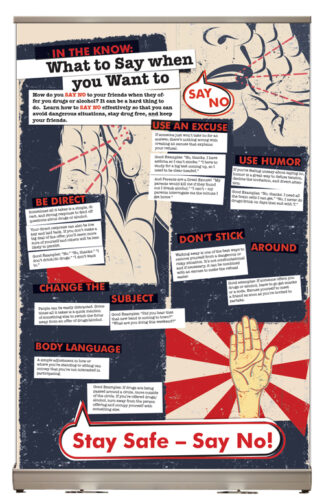
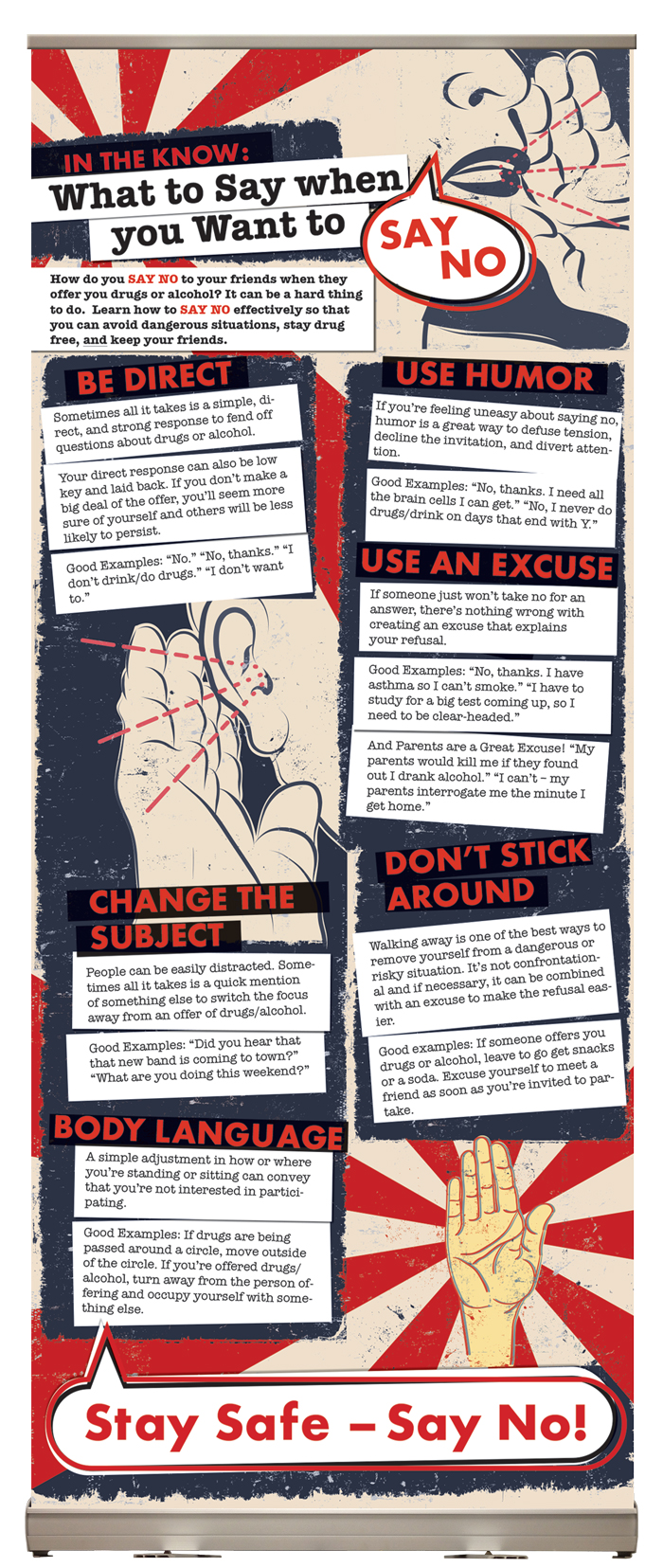
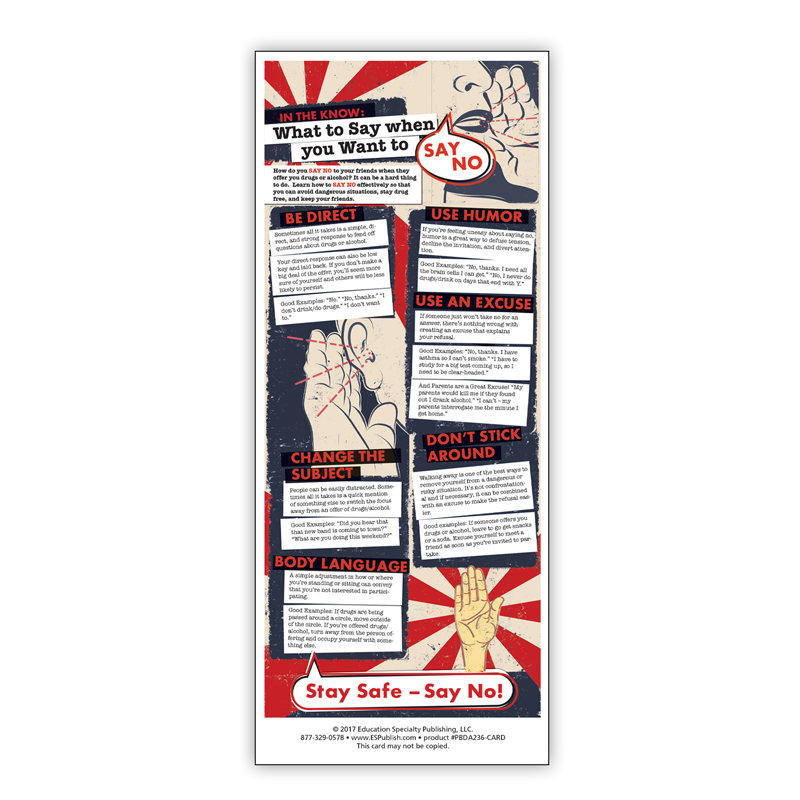
Straightforward and engaging, this refusal skills rack card details various techniques and methods that young people can use when they want to say “no” to drugs and alcohol. These different approaches enable teens to say “no” while keeping their friends and avoiding risky situations.
Be Direct!
Candid responses to offers of drugs or alcohol can be very effective. Laid back or low key responses convey a sense of confidence and self-assuredness, causing those who made the initial offer less likely to persist. Examples of frank answers include, “No, thanks” or “I don’t drink or do drugs.”
Using humor is a great way to divert attention and defuse tension. It’s also particularly useful if the young person is feeling uneasy about saying no. They may respond with a statement like, “No, thanks. I need all the brain cells I can get.”
Saying no can be especially difficult when people just won’t relent with their offers. In situations like these, using excuses explains the refusal and eliminates the need for repeated offers. Young people can cite the need to prepare for upcoming tests or sporting events in their excuses or they can even attribute their refusal to their parents (“My parents would kill me if they found out I drank alcohol.”)
Change the Subject or Don’t Stick Around.
Next, the handout mentions that it may just take a quick distraction to switch the focus away from an offer of drugs or alcohol. Divert attention by bringing up a different topic. Asking about weekend plans or upcoming parities may be all it takes for people to forget about attempting to get someone else to try drugs or alcohol.
Another appropriate response to drugs or alcohol is to simply walk away. It’s non-confrontational, easy to implement, and it can also be used in combination with excuses. Using an excuse of meeting up with friends provides young people with an easy way out if they’re invited to partake.
Lastly, is body language. Adjusting by standing or sitting positions can convey a lack of desire in participating. Young people can turn away from those who are offering them drugs or alcohol. If drugs are being passed around a circle, they can move or lean outside of the circle.
Empowering young people to say no is crucial to their healthy development. When they learn appropriate refusal skills, they’ll have no problem saying no with confidence.
If you like this In the Know: What to Say When You Want to Say NO Presentation Card, then check out more of our Drug Use Prevention Materials.
Shop more Presentation Card Products.